
Winter Preparedness Campaign 2026: See what's changed, share what's new, strengthen your practice!
Winter often brings an increase in respiratory and gastrointestinal infections, placing additional pressure on health and care services. Protecting everyone in our health and care settings starts with understanding transmission risk and applying the right precautions at the right time.
This year's campaign focuses on the updated Transmission based precautions (TBP) guidance and the resources available to help health and care staff understand the changes and apply them confidently in practice.
The Transmission Based Precautions (TBPs) guidance in the National Infection Prevention and Control Manual (NIPCM) and Care home IPC Manual has been updated.
These changes are designed to support a more risk-based approach to preventing and controlling the spread of infection, while protecting individuals.
Whether you are delivering care, leading teams, or supporting and championing infection prevention and control across your organisation, it is important that you understand what has changed and what this means for your role.
See what's changed
Understand the updated Transmission Based Precautions guidance

The updated guidance introduces several important changes to the way Transmission Based Precautions are applied in health and care settings.
Key changes include:
- A new way of describing infection transmission
- Updated terminology and language to support a clearer understanding of how infections spread.
- A new approach to categorising transmission risk
- Introduction of risk categories (R categories).
- Consideration of vulnerable health and care staff within risk assessments.
- Consideration of high-risk exposures.
- Changes to face mask selection
- Updated guidance on when to use a Fluid Resistant Surgical Face Mask (FRSM) and when Respiratory Protective Equipment (RPE) is required.
- Putting on a mask before entering a room or care area
- Consideration of long-range exposure
- Reinforcing the importance of donning a mask before entering the room/care area
- Use of FRSM when caring for individuals who are immunocompromised
- Updated recommendations to support the protection of vulnerable patients.
- Extended use of masks during periods of high transmission
- Guidance for health and care staff, patients, residents and visitors when local health boards determine local increased transmission risk.
Understanding these changes will help ensure that precautions remain proportionate, effective and based on risk.
Find out more
Take time to familiarise yourself with the updated guidance and supporting resources.
- What's Changed?
- A summary of the key changes within the updated TBP guidance.
- Frequently Asked Questions (FAQs)
- Practical answers to common questions relating to this update.
- Appendix 15
- An algorithm to support appropriate mask selection
- Presentation Slides
- Download the TBP update presentation to support local learning and team discussions.
- TURAS Learning
- Keep your infection prevention and control knowledge up to date.
- Complete the Patient and Resident Placement and Assessment of Risk learning module.
- Complete the updated Transmission Based Precautions learning module.
- Evidence Resources
- Understand the evidence which informs transmission-based precautions, RPE and FRSM guidance.
- Systematic literature reviews.
- Considered Judgement Forms (CJFs).
Share what's new
Help colleagues build awareness and confidence

Support colleagues to understand the changes by:
- Discussing the updates during team meetings and safety huddles.
- Using the presentation materials in local teaching sessions.
- Signposting staff to TURAS learning modules and supporting resources.
- Sharing key messages across your organisation and professional networks.

Support patients, residents, service users and visitors by:
- Keeping them informed about any infection prevention and control precautions that are in place.
- Explaining why precautions are needed and how they help protect individuals and those around them.
- Promoting good hand and respiratory hygiene and encouraging everyone to play their part in preventing the spread of infection.
- Listening and responding to questions or concerns, providing practical advice on what individuals can do to support safer care environments.
- Reminding visitors not to visit if they are feeling unwell or have symptoms of an infectious illness.
Clear communication can help build understanding, confidence and cooperation with infection prevention and control measures.
 Every Conversation Counts. Champion the updated guidance by talking about the changes, supporting learning, and helping everyone understand the precautions that keep people safe.
Strengthen Your Practice
Apply the guidance consistently to protect patients, residents, service users and staff
While there are important changes within the updated guidance, many core principles remain unchanged.
Remember:
Standard infection control precautions (SICPs) always matter
 SICPs remain the foundation of infection prevention and control and must be applied by all staff, at all times, in all care settings for all individuals, whether infection is known to be present or not.
The most effective controls should always be considered first
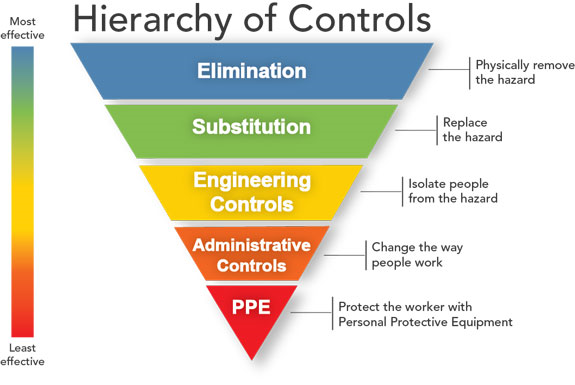 Think beyond PPE.
Consider how environmental, engineering and administrative controls can work together to minimise transmission risk and support safer care. The Hierarchy of Controls helps us identify and apply the most effective measures to reduce transmission risk.
Effective infection prevention and control relies on:
- Eliminating risks where possible
- Engineering and environmental controls
- Administrative controls, including policies, procedures and training
- PPE as the final layer of protection
Transmission Based Precautions (TBP) starts with risk assessment

Successful implementation begins with:
- Early identification of infection symptoms
- Assessing transmission risk
- Appropriate screening
- Effective patient and resident placement and cohorting decisions
Strengthen your practice by applying SICPs, using the Hierarchy of Controls, and making informed decisions that reduce transmission risk and protect those in your care.